stucco plaster contractor Devon
When to Repaint Stucco Exterior in Devon, AB
Practical guidance for Devon homeowners and property managers who want durable exteriors in Alberta’s freeze-thaw climate. Written from the perspective of a local stucco contractor serving the T4G postal code, Leduc County, and the Edmonton Metropolitan Region.
Devon’s climate sets the repainting schedule more than the calendar
Devon sits in the river valley along the North Saskatchewan River. The town sees hard winters, chinooks, and spring saturation. That cycle drives micro-movement in stucco, forces moisture into hairline cracks, and punishes coatings with sudden temperature swings. The result is early chalking, fading, and patchy loss of sheen on south and west faces. Homes near Voyageur Park and the Devon Lions Campground also contend with morning humidity and frost loads along cold walls.
In this setting, repainting is not about looks alone. A sound coating contributes to moisture control, UV protection, and thermal stability within the wall assembly. Depend Exteriors treats repainting as envelope maintenance, not décor. The crew assesses drainage planes, air barriers, flashings, and sealants before talking colour. That approach prevents expensive callbacks and hidden damage behind the finish coat.
Understand your stucco type before you paint
Two systems dominate in Devon: traditional cement stucco and EIFS, also called Exterior Insulation and Finish Systems. Acrylic stucco is a polymer finish often used on both systems as the visible coat. Each responds differently to paint and to Alberta winters.
Traditional cement stucco
Traditional stucco uses wire lath over sheathing, then a scratch coat, brown coat, and a finish coat. It breathes well and tolerates breathable masonry paints and acrylic coatings with moderate film build. It can accept elastomeric coatings on crack-prone façades, but only if the substrate is dry and sound. Repainting can proceed once pH stabilizes after any fresh repairs and the surface is pressure-cleaned and dry.
EIFS with EPS insulation
EIFS uses Expanded Polystyrene insulation with a base coat, mesh, and an acrylic finish coat. Modern EIFS in Devon should be moisture-managed with a dedicated drainage plane behind the EPS. That path lets incidental water exit. Paint choice matters here. Overly tight coatings can trap water and raise risk of mold growth or delamination. Breathable acrylic coatings made for EIFS are the safe path. Depend Exteriors works with Sto Corp, Dryvit Systems, ADEX Systems, DuRock, Senergy, and Imasco Minerals to match coating permeance to the assembly.
How often should stucco be repainted in Devon
Coating life varies with orientation, brand, film build, and exposure along the river. Here are proven ranges from field work across Highwood, Highwood Park, Robina Park, Miquelon Estates, and the Ravines of Devon:
For standard acrylic coatings on traditional stucco, most façades hold 5 to 8 years on south and west walls, and 7 to 10 years on north and east walls. High-solids elastomeric on crack-prone cement stucco extends to roughly 7 to 12 years if the substrate stays dry and well caulked. Breathable EIFS finish coatings run 6 to 10 years if surface moisture remains controlled and sealants around windows and doors stay intact. River-adjacent properties sometimes drop a year from those bands due to humidity, frost, and wind-driven rain.
If colour fade is the only complaint, repainting can wait. If hairline cracks, chalking, or efflorescence appear, repaint sooner. Coatings must help with water management, not mask active problems.
Clear signs that point to repainting now
In Devon’s T4G area, the following symptoms often show up after a harsh winter or a summer of hail and high UV. Each symptom hints at a different root cause and dictates the prep steps before the brush or sprayer comes out.
Chalking and dusty residue
Rub the wall with a dark cloth. If the cloth shows powder, the resin in the existing finish has degraded under UV. Paint will not anchor to a chalky film. Washing, light abrasion, and a compatible masonry primer will be needed. On EIFS, the team avoids aggressive abrasion to protect the mesh and finish coat integrity.
Hairline cracking and map patterns
Freeze-thaw cycles and building movement cause micro-cracks in the finish coat. If cracks are random and shallow, a flexible acrylic or elastomeric finish can bridge them. For structured cracks that outline panels or openings, the issue may be lath movement, control joint gaps, or thermal stress near corners. The solution starts with joint review and sealant replacement, not paint.
Efflorescence and staining
White mineral deposits indicate water migration through cement-based material. Painting over efflorescence fails. Rinsing, neutralization, and source control are mandatory. Staining near flashings points to detailing issues. Flashings and drip edges must shed water cleanly before paint is considered.
Delamination and bulging
A hollow or drummy sound during a tap test signals separation. On EIFS, bulging may indicate trapped water behind the base coat or compromised EPS. On cement stucco, it can signal bond loss to the scratch coat. Repainting cannot fix this. Repair or partial replacement comes first, then coating.
Parging deterioration
At the foundation line, parging takes abuse from splashback and ice. Flaking parging invites wicking and pest intrusion. Recoat with an acrylic-modified parge or compatible cementitious layer after removal of loose material. Paint or acrylic finish can follow with careful moisture control.
The science behind repainting that lasts in Alberta
Durable results come from matching coating permeability to the wall assembly, controlling moisture, and working within temperature and dew point limits. The Depend Exteriors process reflects that discipline on both residential and commercial projects in Devon, Leduc County, Calmar, Beaumont, Spruce Grove, Stony Plain, and south Edmonton.
Permeability and EIFS safety
EIFS uses EPS insulation over a drainage plane and air barrier. Water that gets behind the finish must dry to the exterior. Coating permeability, often expressed as perms, must be high enough to let vapour escape. Overly tight films can trap water, leading to mold growth or adhesive failure. The team specifies EIFS-compatible finishes from Sto, Dryvit, ADEX, Senergy, and DuRock that maintain drying potential. For cement stucco, breathable acrylic or silicone-modified acrylics are common choices in Devon’s climate.
pH, cure times, and alkali burn
Fresh cement patches hold high pH. Painting too soon can cause alkali burn and colour shift. The crew tests with pH indicators and waits for safe levels. That window ranges from several days to a few weeks depending on temperature and ventilation. Primers rated for high-alkali substrates may be used where time is tight but only if moisture readings are low.
Moisture measurement and dew point timing
Substrate moisture is measured with moisture meters before repainting. Thresholds vary by product, but the core rule is simple. Do not trap water. If an assembly sits near the dew point at application time, drying stalls and adhesion drops. Devon’s evenings cool fast, especially near the North Saskatchewan River. The team sets work windows to keep substrate temperature above 5°C and rising, with no freezing forecast for at least 24 hours after application.
Sealant and flashing first
Coatings fail where water enters. Window and door perimeters get fresh, high-grade caulking. Head flashings and kick-out flashings are checked. Any open laps get corrected. Without this step, repainting becomes a cosmetic patch that hides an active leak path.
Devon neighbourhood patterns and what they mean for repaint timing
Highwood and Highwood Park have mature trees that shed organic debris and shade walls. That shade slows drying on north faces and feeds biological staining. Repaints may come sooner on those faces. Homes in the Ravines of Devon carry exposure from wind funnels along the valley. That exposure weathers west walls faster. Miquelon Estates and Robina Park often feature custom elevations with complex joints, built-outs, and stone veneer transitions. Those transitions need careful sealing and paint cuts to avoid wicking and efflorescence. Properties near the University of Alberta Botanic Garden and weekend traffic to Castrol Raceway see dust and pollen that cling to textured acrylic finishes. Regular low-pressure washing lengthens coating life.
Across T4G, hail events mark the calendar more than paint brand. After a hailstorm, Depend Exteriors performs tap tests and visual scans for spalling and micro-fractures. If the finish is bruised but the base coat is intact, a high-build acrylic finish can restore the surface. If mesh is exposed, repair comes first, then coating.
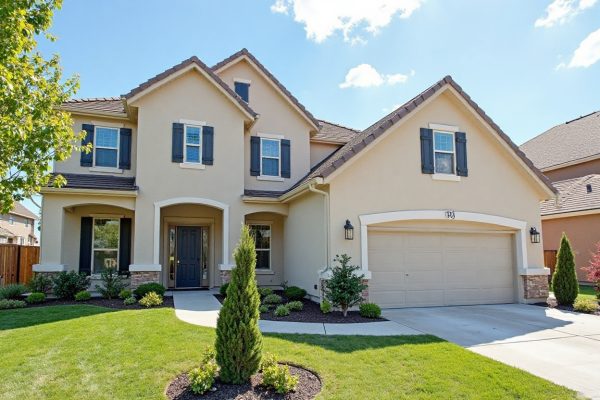
Repainting stucco vs renewing with an acrylic finish
Some Devon exteriors carry integral colour acrylic finish that has faded but remains bonded. In those cases, renewing the finish with a fresh acrylic coat makes sense. Texture sprayers deliver a controlled aggregate profile and even sheen. Where clients want a colour match for existing stone veneer or trim, paint offers a precise colour target across all elevations. The trade-off is film thickness control and breathability management, especially on EIFS walls.
For cement stucco with persistent cracking, an elastomeric coating may bridge hairlines and resist future movement. It performs best after joints and penetrations are sealed, and after efflorescence sources are controlled. On EIFS, Depend Exteriors avoids heavy elastomeric unless the product is specifically rated for EIFS and tested for permeance. Paint is never used to hide delamination. That problem needs structural correction.
Preparation steps Devon properties need before a quality repaint
Preparation dictates longevity in a river valley climate. The crew uses scaffolding where needed for safety and access. Laser levels help check control joint alignment and reveal panel shift that often explains cracking. Power mixers produce consistent primer and coating blends during larger applications. Texture sprayers provide uniform finish where an acrylic topcoat is selected.
What a professional repaint sequence looks like
- Inspection and moisture mapping using moisture meters, with emphasis on window heads, sills, and foundation transitions.
- Detail repairs to flashings, drainages, and sealant joints around doors, windows, and service penetrations.
- Cleaning by controlled washing to remove chalk, dust, biological growth, and de-icing residues common after Devon winters.
- Crack treatment with flexible patch compounds rated for stucco systems, followed by spot-priming.
- Coating application within the correct temperature and dew point window, with film build verified against manufacturer specs.
Where parging is loose, the crew removes all weak material and reinstalls an acrylic-modified parge coat. On EIFS edges and at transitions to stone veneer, extra attention is placed on drip edges and sealants to avoid capillary water intake.
Painting around stone veneer and parging in Devon
Stone veneer accents are common across Devon and Leduc County. They change how water behaves at transitions. Paint lines must fall above the cap flashing or along a true break. Where the stone lacks a cap flashing, the team recommends installing one before repainting. That step protects the stucco below from staining and efflorescence. On parging, many owners request a uniform colour band for a clean line along grade. An acrylic finish or compatible masonry paint can deliver that, but only after substrate drying and surface consolidation. It is vital to keep coating off soil contact. A small gap above grade lets the parge dry and breathe.
Colour and sheen choices that survive Alberta winters
Dark colours absorb heat and push thermal swing in Devon’s chinook cycles. That swing can widen hairline cracks at corners and control joints. Mid-tone, high-quality acrylic finishes with high UV resistance show the best long-term performance on both EIFS and cement stucco. Flat and low-sheen products mask texture well, but quality satin acrylics shed dirt better on windward walls. Depend Exteriors works with Imasco Minerals, Sto Corp, Dryvit Systems, DuRock, and ADEX Systems to select finishes with proven resin packages for the Edmonton Metropolitan Region.
Cost signals and what drives them in T4G
Repainting costs shift with access, substrate repairs, and coating types. Two-storey river-facing façades need more scaffolding and labour. EIFS that shows prior non-breathable paint may need removal or specialty primers to restore drying potential. Cement stucco with heavy efflorescence needs remedial cleaning and dwell time before any primer. Complex homes in Miquelon Estates with multiple elevations and stone transitions take longer for masking and edge control. Depend Exteriors provides free exterior estimates across the T4G postal code, with an itemized scope that separates repair, prep, and coating so owners see the drivers clearly.
Timing the project in Devon’s weather window
Ideal windows run late spring to early fall. Work can proceed outside that range during mild spells, but substrate temperature and dew point still rule the calendar. Early morning fog along the North Saskatchewan River shifts application to late morning or early afternoon to avoid blushing and slow cure. After a heavy rain, walls need time to dry. Moisture readings guide that break. Painting over a damp wall is asking for blistering and loss of adhesion by the first freeze.
What a “stucco contractor Devon” should bring to your repaint
A credible stucco contractor in Devon pairs technical skill with local judgement. The team should know how freeze-thaw opens hairlines on south-west corners, how spring run-off lifts parging near downspouts, and how wind funnels along the Ravines of Devon drive rain behind weak sealant beads. Tools matter as well. Scaffolding for safe access, laser levels for joint checks, power mixers for consistency, texture sprayers for controlled finish, and moisture meters for subsurface assessment are part of the kit on every substantive repaint.
Brand fluency is another marker. A contractor who can explain when a Sto acrylic finish is better than an elastomeric, or why Dryvit’s EIFS-compatible topcoats protect drying potential on EPS, protects your investment. On higher performance envelopes, ADEX Systems and Senergy options can raise thermal stability and maintain R-value when combined with correct detailing at the drainage plane and air barrier.
Common repainting mistakes in Devon and how to avoid them
- Sealing hairline cracks without checking control joints and flashing details, which lets the cracks return through new paint.
- Using tight elastomeric on EIFS that needs to breathe, trapping moisture behind the base coat and starting delamination.
- Skipping alkali testing on fresh cement patches, leading to colour burn and early failure.
- Painting late in the day near the river, then watching dew settle on uncured films and cause surfactant leaching.
- Painting over active efflorescence without neutralization, which pushes the stain back through new coatings.
Each mistake ties back to moisture control, pH awareness, and breathable coatings. A focused prep plan avoids rework and keeps the building envelope healthy through winter.
What repainting cannot do
Paint cannot fix bulging walls or hollow spots. It cannot bond a delaminated base coat back to EPS or pull a brown coat back onto a loose scratch coat. It will not dry a wet wall or correct a missing kick-out flashing. If the substrate fails in those ways, the right fix involves partial removal, new wire lath, a proper scratch and brown coat, or EIFS base coat and mesh remediation. Only then does paint or an acrylic finish return as the last step.
Local service coverage and response
Depend Exteriors provides rapid exterior dispatch for homes and small businesses across Devon’s T4G postal code. The crew works across Highwood, Highwood Park, the Ravines of Devon, Robina Park, and Miquelon Estates. Projects near Voyageur Park, the University of Alberta Botanic Garden, and riverbank lanes receive special scheduling to work around humidity and traffic patterns. Neighbouring service areas include Leduc County, Calmar, Beaumont, south Edmonton, Spruce Grove, and Stony Plain.
Material partners that perform in Alberta
For traditional cement stucco, the team installs and repairs with systems from Imasco Minerals and DuRock that deliver consistent scratch, brown, and finish coats. For EIFS, Depend Exteriors applies Dryvit Systems, Sto Corp, ADEX Systems, and Senergy products with drainage-plane solutions that suit the river valley freeze-thaw cycle. Texture, aggregate size, and finish coat flexibility are matched to façade movement and exposure, not just design sketches.
FAQs Devon owners ask about repainting stucco
Is repainting different for homes near the river?
Yes. Humidity and dew set earlier, which shortens safe application windows. Also, spring melt saturates grade lines. Moisture checks and later start times help. Breathable coatings remain the default on EIFS near the river.
Can stone veneer stay untouched during repaint?
Yes, with proper masking. But if the stone lacks a cap flashing, expect staining to return unless that flashing is added. Transitions drive many call-backs in mixed façades.
Do hairline cracks need repair if using an elastomeric?
Most hairlines can be bridged by elastomeric. Deep or structured cracks should be opened, filled, and sealed first. Joints and penetrations must be addressed regardless of coating type.
How soon after stucco repair can paint be applied?
Once moisture is controlled and pH drops to a safe range. That can take days to weeks. A compatible primer may speed the schedule, but testing guides the call.
Will repainting change insulation value?
Not significantly. However, a non-breathable layer on EIFS can trap moisture and reduce effective performance of EPS over time. That is why EIFS-rated breathable topcoats are used.
Why Devon homeowners and facility managers choose Depend Exteriors
Depend Exteriors aligns repaint work with building science. The crew checks the drainage plane, air barrier integrity, flashings, and caulking before coating. Moisture meters guide decisions so problems do not get sealed in. The company applies systems from Sto Corp, Dryvit Systems, Imasco Minerals, DuRock, ADEX Systems, and Senergy to match Alberta’s climate and the North Saskatchewan River valley exposures. Technicians work with scaffolding, laser levels, texture sprayers, and power mixers to deliver consistent results across large façades and complex elevations.
The firm backs new installations with a 10-year workmanship warranty and supports Devon projects with WCB Alberta coverage and liability insurance. Financing options include $0 down for qualified clients. The team is BBB Accredited and provides free exterior estimates for the T4G area.
If repainting is on your mind, use this quick Devon-specific check
Walk the south and west elevations at midday and look for chalking, micro-cracks at corners, and dull or flat patches where sheen is gone. Check window heads after a rain. If you see staining, paint will only hide it for a season. Scan the parging line for chips where freeze-thaw has lifted the surface. Tap any suspicious bulges lightly. A hollow sound calls for repair, not a repaint ticket. If two or more of these show up, it is time to invite a stucco contractor Devon trusts for a full exterior audit.
Clear next steps for Devon, AB
Repainting stucco in Devon is about timing, permeability, and moisture control. The right call hinges on system type, exposure along the river, and the condition of joints and flashings. A short site visit answers those questions fast. Depend Exteriors provides free, itemized assessments across T4G with photos, moisture readings, and a plan that separates repairs from coatings. That transparency keeps budgets under control and results durable through winter.
Conversion and trust signals
Depend Exteriors is the local choice for stucco repair, EIFS, parging, acrylic stucco renewals, and exterior renovations in Devon, AB. The team services residential and commercial exteriors and understands the demands of Alberta’s winters and river valley microclimates.
What clients receive:
- Free Exterior Estimate and Comprehensive Exterior Audit for properties across the T4G postal code and Leduc County.
- WCB Alberta Coverage and $2 Million Liability Insurance for on-site safety and protection.
- 10-Year Workmanship Warranty on new installations, with product selections from Sto Corp, Dryvit Systems, Imasco Minerals, DuRock, ADEX Systems, and Senergy.
- $0 Down Financing available on approved credit.
- BBB Accredited service with hundreds of completed projects across the Edmonton area.
To schedule a site visit, search Depend Exteriors on Google Maps and request a consultation. Mention “stucco contractor Devon” and the team will prioritize a T4G dispatch window. Projects near Voyageur Park, the University of Alberta Botanic Garden, Highwood, Highwood Park, Ravines of Devon, Robina Park, and Miquelon Estates receive local routing for fast response.
Depend Exteriors Stucco Repair Experts in Edmonton, AB
Depend Exteriors provides hail damage stucco repair across Edmonton, AB, Canada. We fix cracks, chips, and water damage caused by storms, restoring stucco and EIFS for homes and businesses. Our licensed team handles residential and commercial exterior repairs, including stucco replacement, masonry repair, and siding restoration. Known throughout Alberta for reliability and consistent quality, we complete every project on schedule with lasting results. Whether you’re in West Edmonton, Mill Woods, or Sherwood Park, Depend Exteriors delivers trusted local service for all exterior repair needs.
Depend Exteriors
8615 176 St NW
Edmonton,
AB
T5T 0M7
Canada
Phone: (780) 710-3972
Website: dependexteriors.com | Google Site | WordPress